|

We study plasma application technologies which use reactions of reactive species produced in the plasma. We also study the reaction mechanisms of plasma using laser spectroscopy and simulation. In the plasma, electron-impact reactions produce reactive species including radicals (O, N, OH), ions (N2+, O2-), and excited species (N2(v), N2(A), O2(a), O(D)). As a result, plasma has high chemical reactivity. There are various applications employing the high reactivity of plasma. 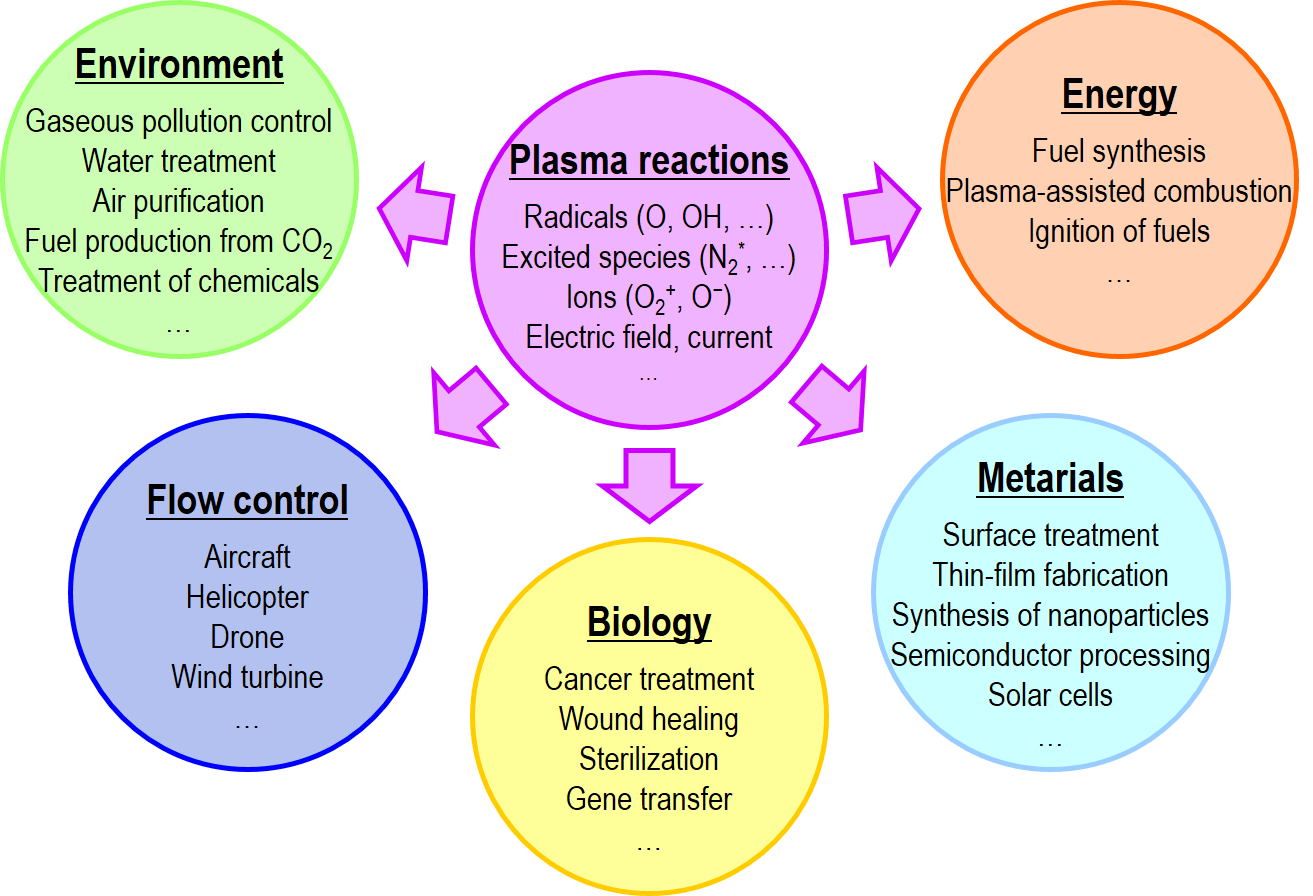
Application technologies using chemical reactivity of plasma Examples of researches in our laboratory (including past researches) · Fundamental study of reactions in plasma. (Laser diagnostics of reactive species, optical emission spectroscopy, etc.) · Simulation of plasma. · Plasma medicine. (cancer treatment, sterilization) · Aeronoutic applications using plasma. (Separation flow control, Noise reduction) · Selective production of radicals. (for measuring the effects of radicals on surface treatments using plasma) · Environmental technologies using plasma. (water treatment, gaseous pollution control) · Plasma assisted ignition and combustion. · Treatment of dye-sensitized solar cells using reactive species. Go to "Researches" for more detail.
Department of Advanced Energy, Latest update: May 06, 2021
|